 Ledger & Linen Designs
How to Build Habits That Stick (One Square at a Time)
Small, practical ideas for building habits you keep, and how a simple monthly tracker helps you see your progress.
Most habits don't fail because of a lack of willpower. They fail because they're too big, too vague or too easy to forget. These ideas help.
Make the habit tiny
"Read 2 pages" is easier to start than "read more." "Walk for 10 minutes" is easier than "get fit." Once the small version is automatic, you can grow it.
Be specific
Decide exactly what counts. "Drink water" is vague; "a glass of water with breakfast" is clear. When the definition is clear, checking it off is honest and satisfying.
Attach it to something you already do
Link the new habit to an existing routine: after brushing your teeth, after your morning coffee, when you sit down at your desk. The existing habit becomes the reminder.
Track it where you'll see it
Filling in a square each day is surprisingly motivating. Looking back over a month of filled squares shows you what's working.
Set a monthly goal, not perfection
Instead of "every single day," aim for a number, like 20 days this month. Missing a day isn't failure; it's just a day. The goal is the trend.
Don't track too many at once
Start with a few habits that matter most. You can always add more next month.
Review monthly
At the end of each month, look at which habits came easily and which didn't. Keep the ones that help, adjust the ones that don't, and start fresh.
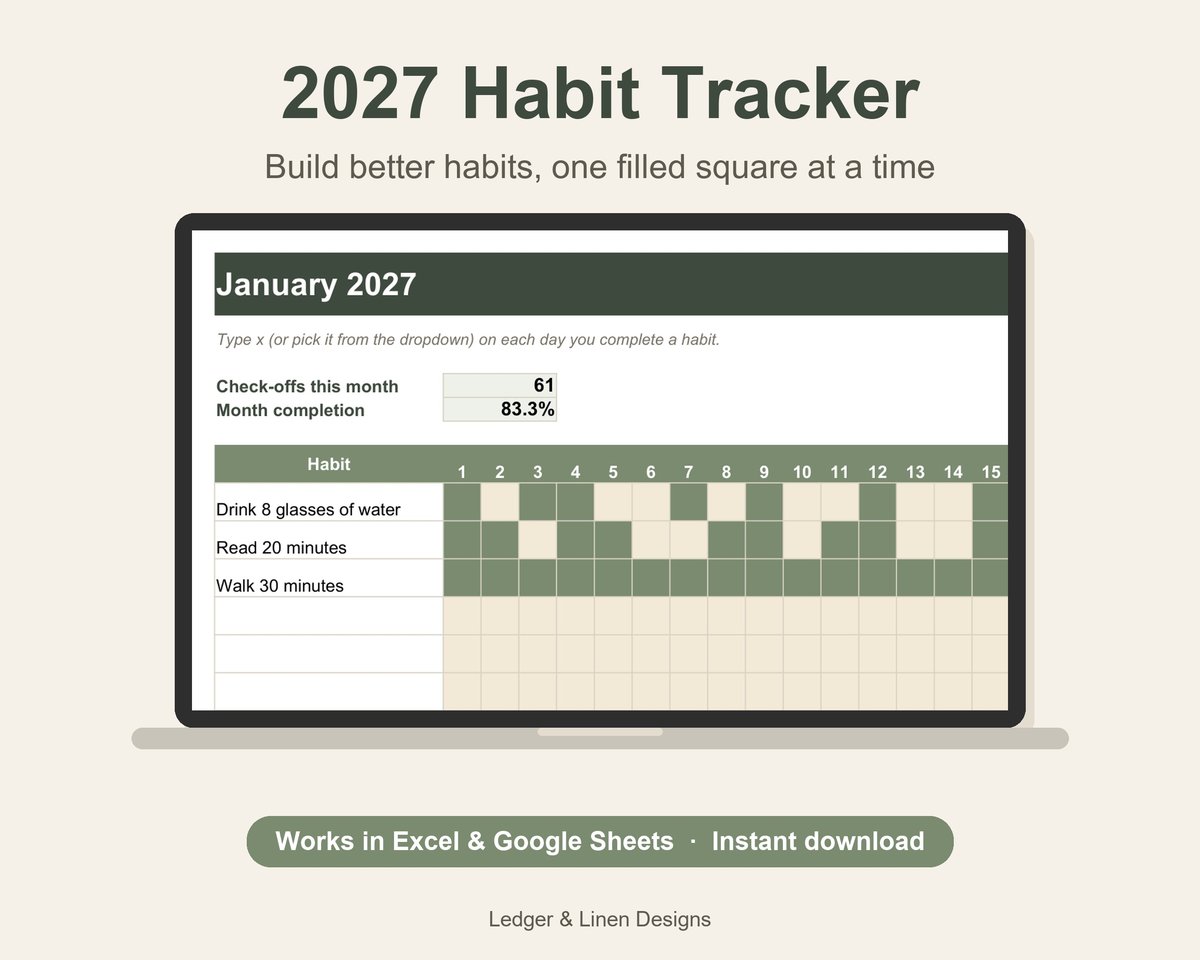
Our 2027 Habit Tracker has a tab for every month of 2027, tracks up to 15 habits, fills in squares as you check off each day and shows your progress against a monthly goal, with a year overview.
This guide is general information to help you get organized. It isn't financial, tax, legal, medical or fitness advice; for decisions that matter, check with a qualified professional.