 Ledger & Linen Designs
How to Track Your Workouts and See Your Strength Progress
What to write down after each session, and how a simple log turns workouts into a clear picture of your progress over time.
Progress in the gym is slow enough that it's hard to feel day to day. Writing down what you did turns it into something you can see. Here's what to track.
What to record each session
For every exercise:
- Date
- Exercise name
- Sets
- Reps per set
- Weight
That's enough. You don't need to track everything to see a trend.
Keep exercise names consistent
"Squat," "back squat" and "squats" look like three different exercises to a spreadsheet. Pick one name for each exercise, ideally from a list, so your history stays together.
Watch volume and your best weight
Two numbers give you a quick picture:
- Total volume: sets × reps × weight, added up. It shows how much work you did.
- Best weight: the heaviest weight you've lifted for an exercise.
Review weekly
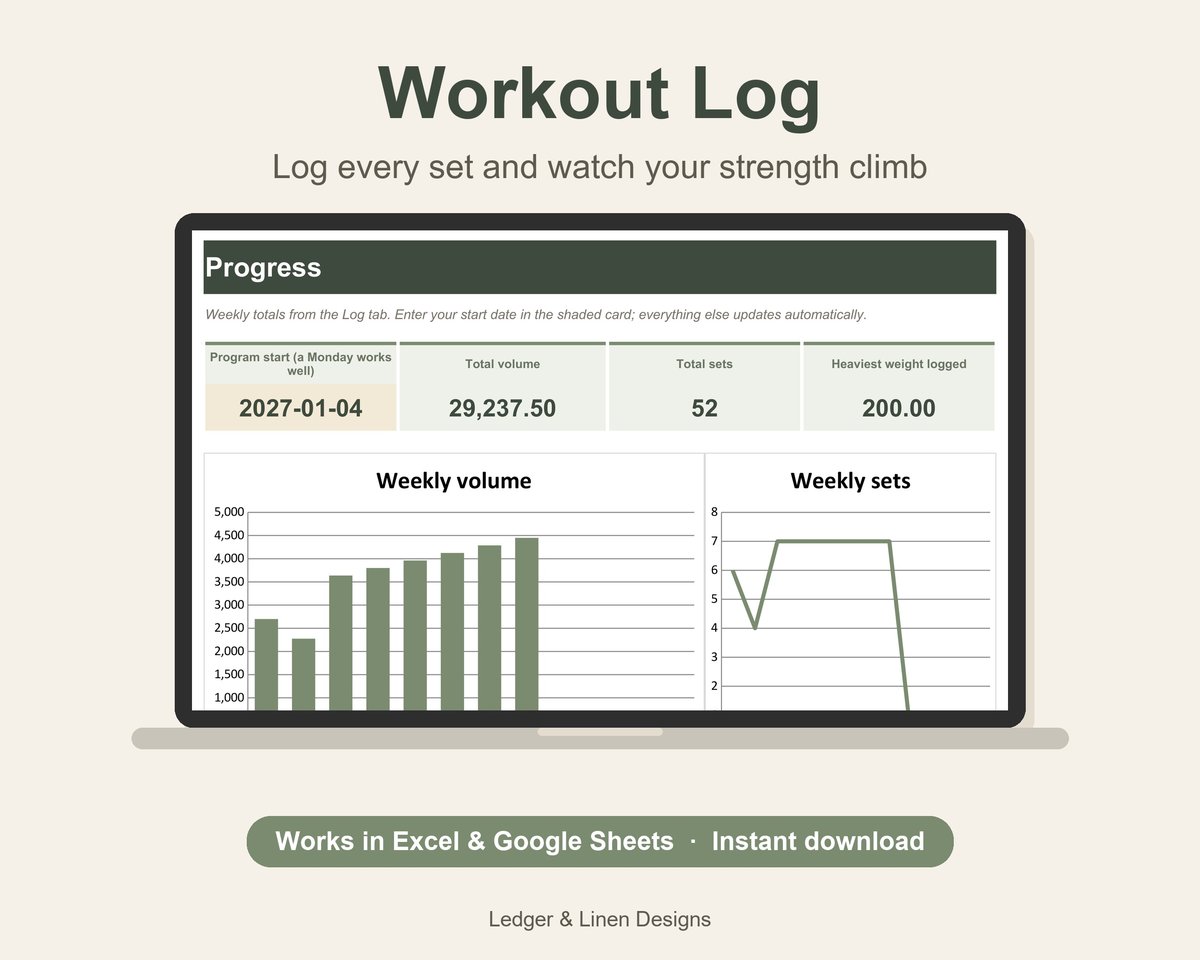
Once a week, look at your total volume compared with previous weeks. A chart makes the trend easy to see at a glance.
Listen to your body
A log shows the numbers, but how you feel matters just as much. Rest, recovery and good form come first. If you're starting a new program, check with a health professional first.
Keep it simple enough to keep doing
The best log is the one you actually fill in. Thirty seconds after each exercise is plenty.
Our Workout Log calculates volume automatically, tracks your best weight and total volume for every exercise, shows a weekly volume chart and works in pounds or kilograms.
This guide is general information to help you get organized. It isn't financial, tax, legal, medical or fitness advice; for decisions that matter, check with a qualified professional.