 Ledger & Linen Designs
How to Make a Wedding Budget in 7 Steps
A calm, step-by-step way to build a wedding budget you can actually stick to, from your total number to the last vendor deposit.
A wedding budget doesn't have to be stressful. The trick is to make decisions in the right order: the total first, then your priorities, then the details. Here's a simple process you can finish in an evening.
1. Agree on your total number
Before you look at a single venue, sit down together (and with anyone else who is contributing) and agree on the total you're comfortable spending. Write down who is contributing what, so there are no surprises later.
2. Pick your top three priorities
Is it the food? The photos? Having everyone you love in one room? Choose three things that matter most to you as a couple. These get the biggest share of the budget, and everything else works with what's left.
3. List every category
Write out every category you might spend on, even the small ones. A typical list includes:
- Venue and rentals
- Food, drinks and cake
- Photography and video
- Attire, hair and makeup
- Flowers and decor
- Music and entertainment
- Stationery and postage
- Rings
- Gifts and favors
- A buffer for the unexpected
4. Give each category an estimate
Spread your total across the categories, starting with your three priorities. Don't aim for perfect numbers yet; an honest first guess is enough. Keep a buffer category so one surprise doesn't throw off everything else.
5. Track quotes and commitments
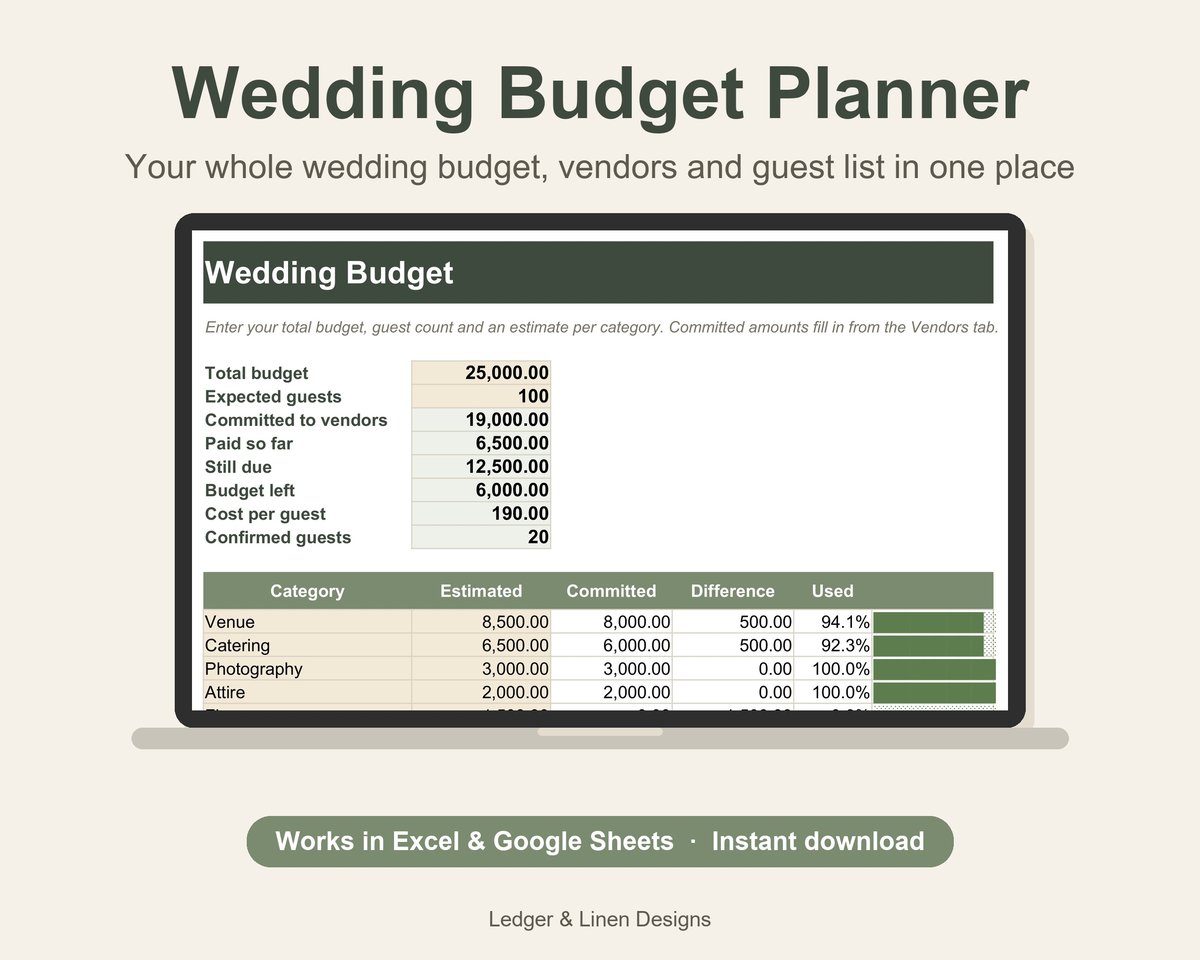
As quotes come in, record what each vendor actually costs next to your estimate. The difference between "estimated" and "committed" tells you early where you're over, so you can adjust before it's too late.
6. Keep deposits and due dates in one place
Most vendors ask for a deposit now and the balance later. Log every deposit you've paid and every balance still due, with its date. Nothing feels worse than a forgotten final payment the week of the wedding.
7. Connect your guest count to your budget
Many costs grow with every guest: food, drinks, chairs, favors and stationery. Knowing your cost per guest helps you make guest-list decisions with real numbers instead of guesses.
Keep it light
Review your budget once a week for ten minutes. Celebrate the categories that come in under estimate, and move that money to where you need it most. A budget is a plan, not a rulebook.
Our Wedding Budget Planner handles the tracking for you: estimates versus commitments by category with differences flagged, a vendor tracker with deposits, balances and due dates, a guest list with RSVPs, and your cost per guest calculated for you.
This guide is general information to help you get organized. It isn't financial, tax, legal, medical or fitness advice; for decisions that matter, check with a qualified professional.