 Ledger & Linen Designs
Wedding Vendor Tracker: Keep Deposits, Balances and Due Dates Straight
How to organize every wedding vendor, what you've paid, what's still due and when, so nothing slips through the cracks.
Between the venue, the caterer, the photographer, the florist and everyone else, a wedding can easily involve a dozen vendors. Each one has its own contract, deposit and payment schedule. A vendor tracker puts all of it on one page.
What to record for each vendor
- Vendor name and service
- Contact person, phone and email
- Total contract price
- Deposit amount and the date you paid it
- Balance still due and its due date
- What's included (hours, number of guests, delivery, setup)
- Status: researching, booked, paid in full
Total committed versus your budget
Add up every booked contract to see your total committed spending. Compare it with your budget, category by category. If one category runs over, you'll see it while you can still adjust somewhere else.
Build a simple payment calendar
Sort your vendors by the date their balance is due. Many final payments fall in the last few weeks before the wedding, which is also when you're busiest. Seeing them in order helps you plan your cash ahead of time.
Keep notes on what you agreed
Write down anything you agreed outside the contract: the song for your first dance, the photo list, the delivery window for flowers. On the day, someone you trust can check the notes instead of calling you.
Hand it off before the wedding
A week before the big day, share your vendor list (names, arrival times and phone numbers) with your coordinator or a trusted friend. Then let them handle the questions.
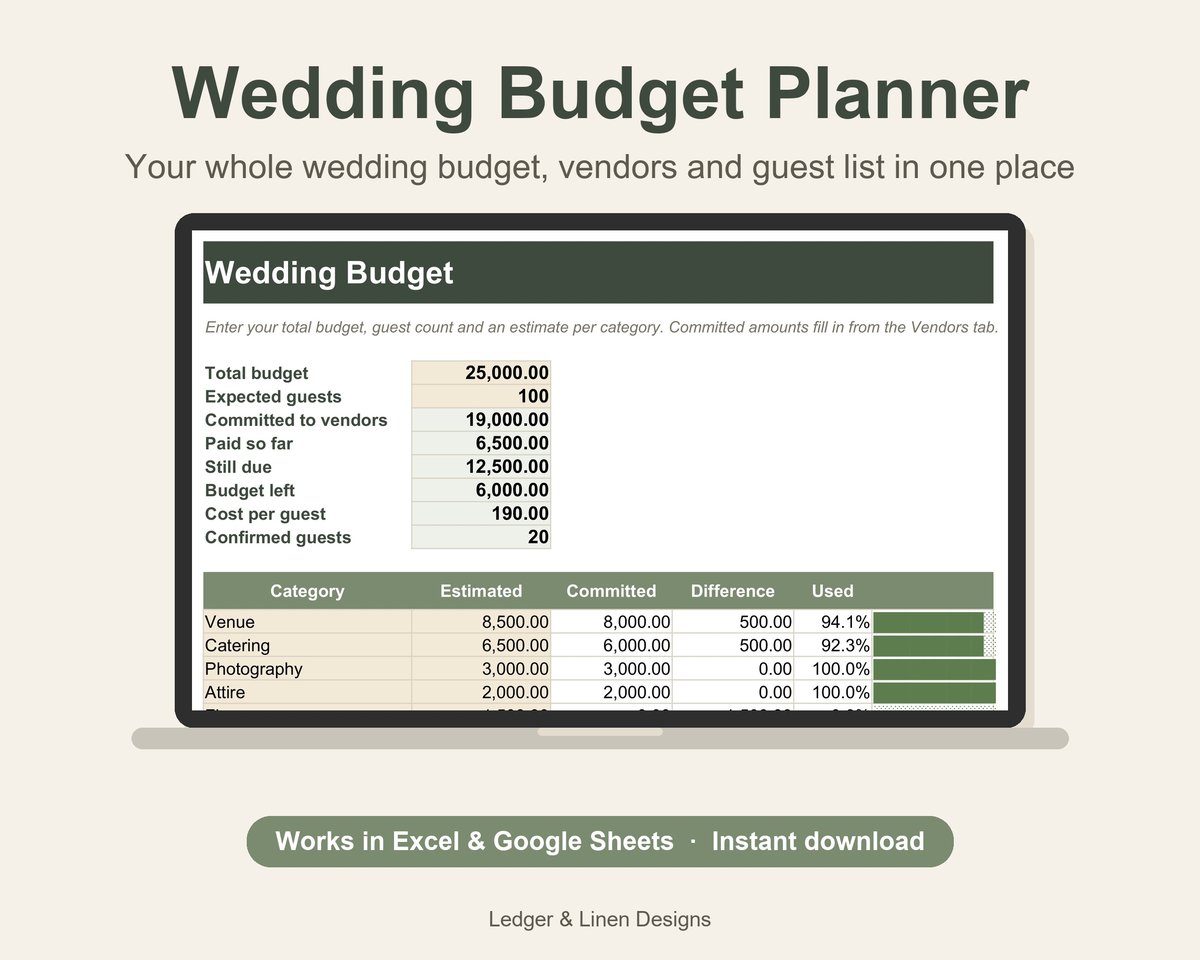
Our Wedding Budget Planner includes a vendor tracker with what you've paid so far, the balance still due and its due date. Each vendor's cost flows into your budget by category, so you can see your spending at a glance.
This guide is general information to help you get organized. It isn't financial, tax, legal, medical or fitness advice; for decisions that matter, check with a qualified professional.