 Ledger & Linen Designs
How to Plan a Vacation Budget Without the Guesswork
Build a trip budget by category, track bookings and spending, and see your cost per person and per night before you go.
A good trip budget does two jobs: it tells you what the trip will really cost before you book, and it keeps spending on track while you're away. Here's how to set one up.
1. List the categories
- Flights or other transport
- Lodging
- Food and drinks
- Activities and tours
- Local transport (rental car, fuel, transit)
- Shopping and souvenirs
- Travel insurance
- A small buffer
2. Plan each category
Give every category a planned amount. Research a few prices for the big items (flights, lodging) and make realistic guesses for the rest.
3. Know your per-person and per-night cost
Dividing the total by the number of travelers and nights makes it easier to compare options. A more expensive hotel might look different once you see the cost per night split between everyone.
4. Track bookings in one place
For every booking, write down the provider, date, time and confirmation number. When you're standing at a rental counter or hotel desk, you'll find it in seconds.
5. Log spending as you go
During the trip, log what you spend each day by category. Planned versus spent shows you whether you can say yes to that extra excursion.
6. Plan the days, loosely
A simple day-by-day itinerary helps you avoid backtracking and makes sure you don't miss the things you care about most. Leave some empty time; it's a vacation.
7. Pack with a list
A packing list you tick off as you pack saves the "did I bring chargers?" panic at the door.
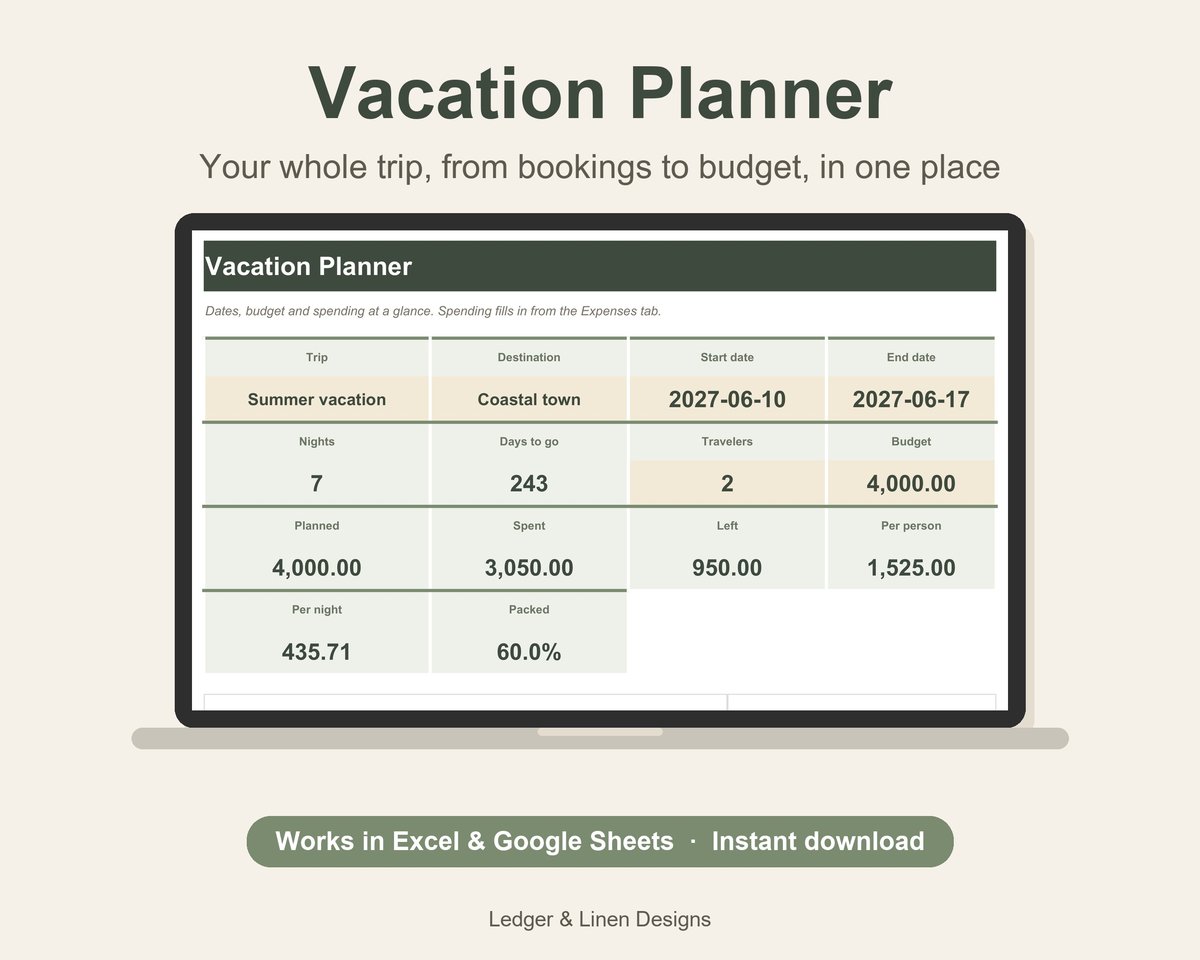
Our Vacation Planner brings all of this together: a day-by-day itinerary, a bookings tracker, a budget by category with planned versus spent, per-person and per-night costs, a countdown and a packing list.
This guide is general information to help you get organized. It isn't financial, tax, legal, medical or fitness advice; for decisions that matter, check with a qualified professional.