 Ledger & Linen Designs
Debt Snowball vs Debt Avalanche: What's the Difference?
A plain-language comparison of the two most popular ways to organize debt payments, and how to choose the one you'll stick with.
If you're paying off more than one debt, the order matters. Two popular methods help you decide which debt gets your extra money first. Both start the same way: pay the minimum on every debt, then put any extra toward one target.
The debt snowball
With the snowball, you put your extra money toward the smallest balance first. When it's paid off, its payment rolls over to the next smallest, and so on.
- Why people like it: you see a debt disappear sooner, and that early win can be motivating.
- The trade-off: you may pay more interest overall, because a larger high-interest debt waits longer.
The debt avalanche
With the avalanche, you put your extra money toward the highest interest rate first. When it's paid off, its payment rolls to the next highest rate.
- Why people like it: it usually costs less in total interest.
- The trade-off: if your highest-rate debt is also large, it can take a while before the first debt is gone.
The rollover is the secret
In both methods, when a debt is paid off you don't spend its old payment elsewhere. You add it to the next debt. That's what makes the plan speed up over time.
How to choose
Compare both on your own numbers: the debt-free date and the total interest. If they're close, pick the one that keeps you motivated. If one saves noticeably more, that might be worth the patience. The method you stick with beats the perfect method you abandon.
Keep it visible
Seeing your remaining balance shrink each month helps you keep going. Update your numbers when you make payments, and look at the chart, not just the spreadsheet rows.
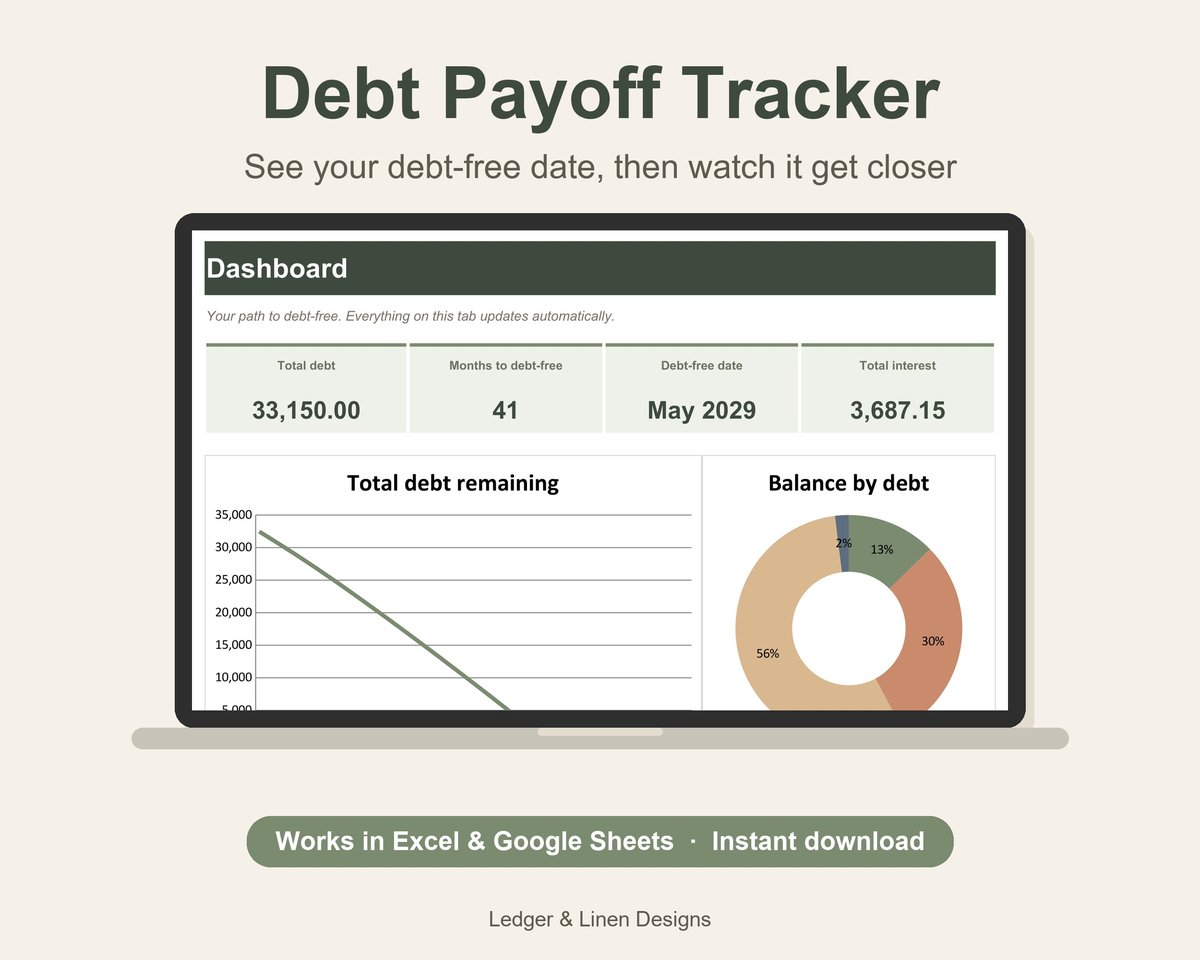
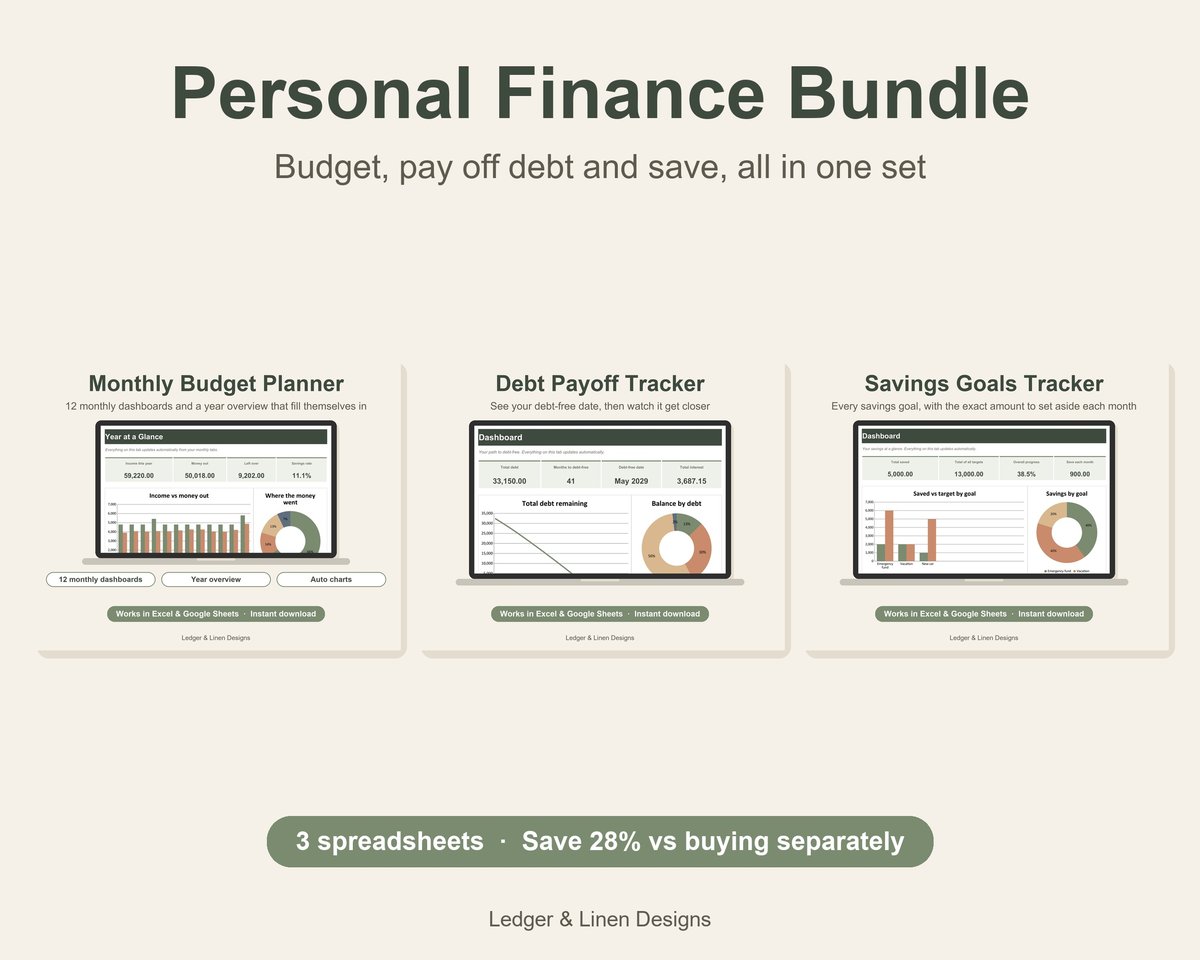
Our Debt Payoff Tracker lets you switch between snowball and avalanche with one click, so you can compare your debt-free date and total interest for each method, with payments rolling over automatically.
This guide is general information to help you get organized. It isn't financial, tax, legal, medical or fitness advice; for decisions that matter, check with a qualified professional.