 Ledger & Linen Designs
Sinking Funds Explained: Save for Big Costs Without the Stress
What sinking funds are, how to work out the monthly amount for each one, and how to keep track of several goals at once.
A sinking fund is money you set aside, a little at a time, for a cost you already know is coming. Instead of a big bill catching you off guard, you've been preparing for it all along.
Common sinking funds
- Car maintenance and registration
- Holidays and gifts
- Vacations
- Annual subscriptions and memberships
- Home repairs
- Back-to-school costs
- An emergency fund
How to work out the monthly amount
The math is simple:
- Decide the total you need (the target).
- Decide when you need it (the target date).
- Count the months between now and then.
- Divide the amount still needed by the number of months.
For example, if you want 1,200 for a trip that's 10 months away and you've saved nothing yet, you'd set aside 120 a month. If you already have 200, it's 1,000 over 10 months, so 100 a month.
Keep each fund separate
When several goals share one pot, it's hard to know if you're on track for each one. Track every fund separately, even if the money sits in the same savings account.
Check progress monthly
Once a month, look at how much each fund has, how far it is from the target, and whether the monthly amount needs to change. If a date moves or a cost goes up, recalculate.
Celebrate the finish line
When a fund reaches its target, mark it reached and enjoy it. You planned for this.
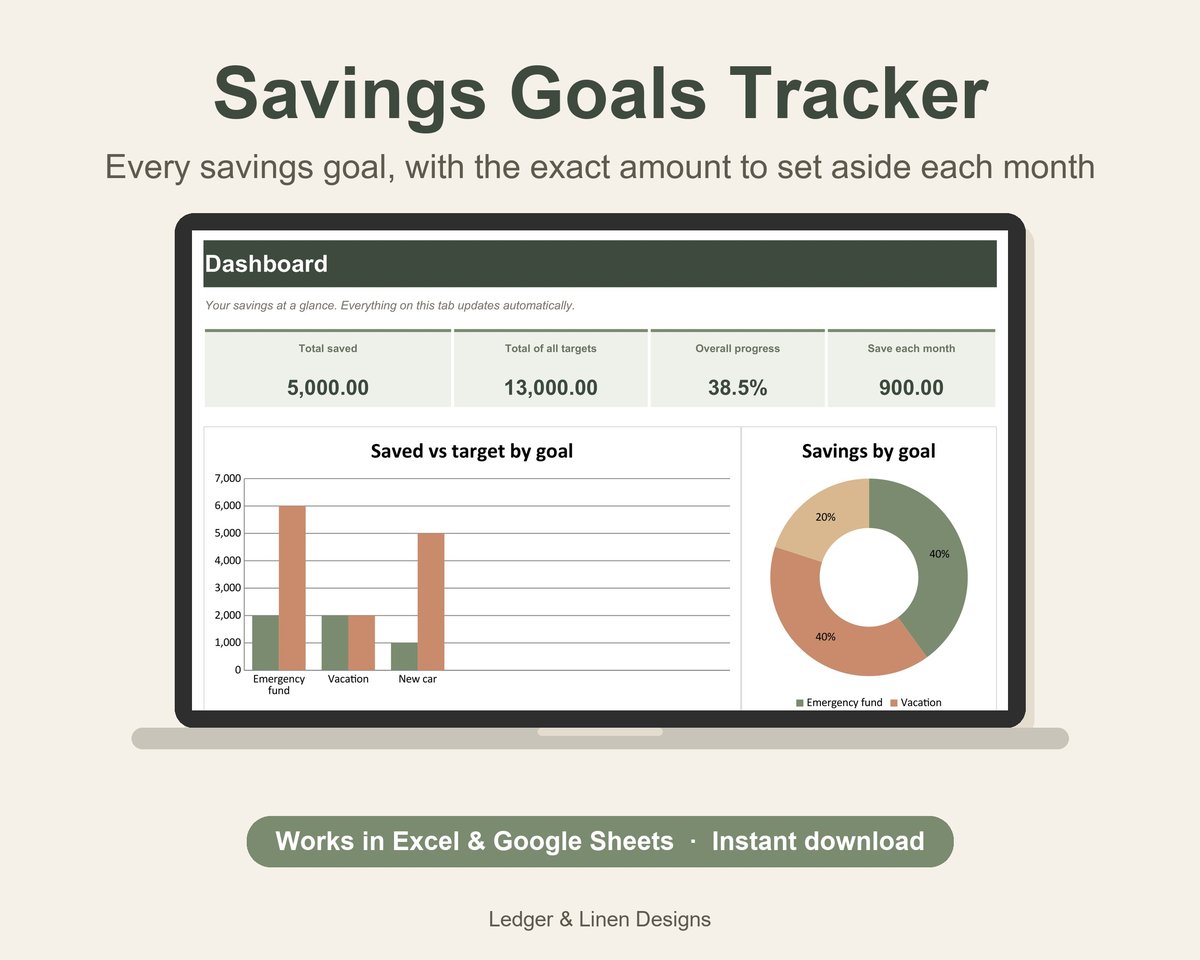
Our Savings Goals Tracker tracks up to 12 goals at once and calculates the monthly amount needed to hit each target date, with progress for every goal.

This guide is general information to help you get organized. It isn't financial, tax, legal, medical or fitness advice; for decisions that matter, check with a qualified professional.