 Ledger & Linen Designs
How to Start a Monthly Budget (and Actually Keep It)
A simple monthly budgeting routine for beginners, from listing your income to a 10-minute check-in at the end of each month.
A budget is just a plan for your money. You decide in advance where it goes, then check how reality compares. Here's a beginner-friendly way to start.
1. Write down your monthly income
Start with what actually arrives in your account each month after deductions. If your income changes from month to month, use a careful, lower estimate.
2. Group your spending
Four groups cover almost everything:
- Needs: rent or mortgage, utilities, groceries, insurance, transport
- Wants: dining out, entertainment, shopping, hobbies
- Savings: emergency fund, goals, future plans
- Debt: credit cards, loans, anything you're paying off
3. Give every category a plan
Set a planned amount for each category. Your total plan should match your income. If it doesn't, adjust the wants first.
4. Log purchases as you go
The habit that makes budgeting work is logging spending regularly, ideally once a day. It takes a couple of minutes, and it's far easier than reconstructing a month of receipts.
5. Watch the categories, not just the total
A total that looks fine can hide one category that's way over. Check each category's progress so you can slow down before it runs out.
6. Plan for months that are different
Some months are more expensive: holidays, birthdays, annual subscriptions, back-to-school. Adjust those months' plans ahead of time instead of being surprised.
7. Do a 10-minute monthly check-in
Pick the same day each month. Look at what came in, what went out, and which categories were over or under. Then set next month's plan. That's it.
Start small
Your first month won't be perfect, and that's fine. Each month your plan gets more realistic.
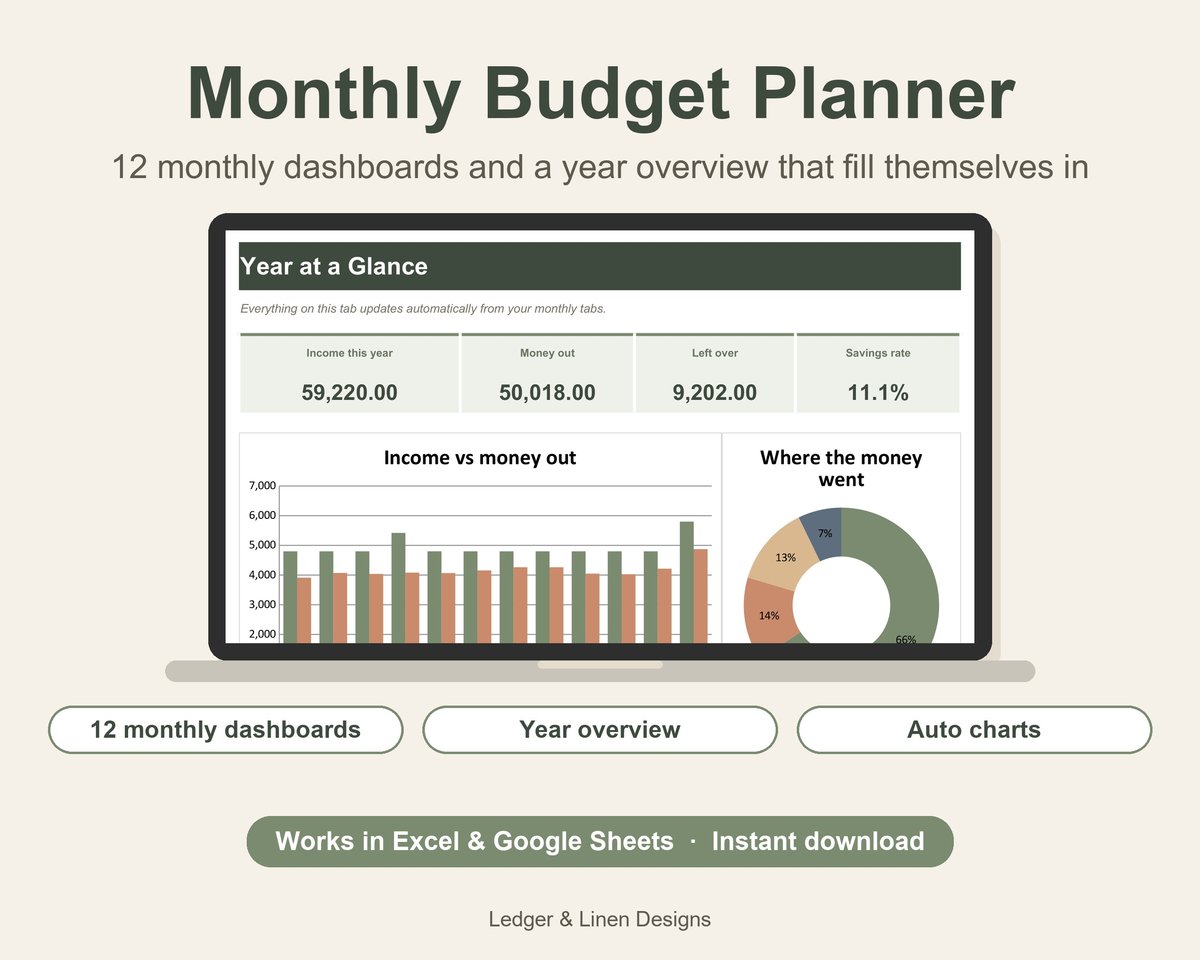
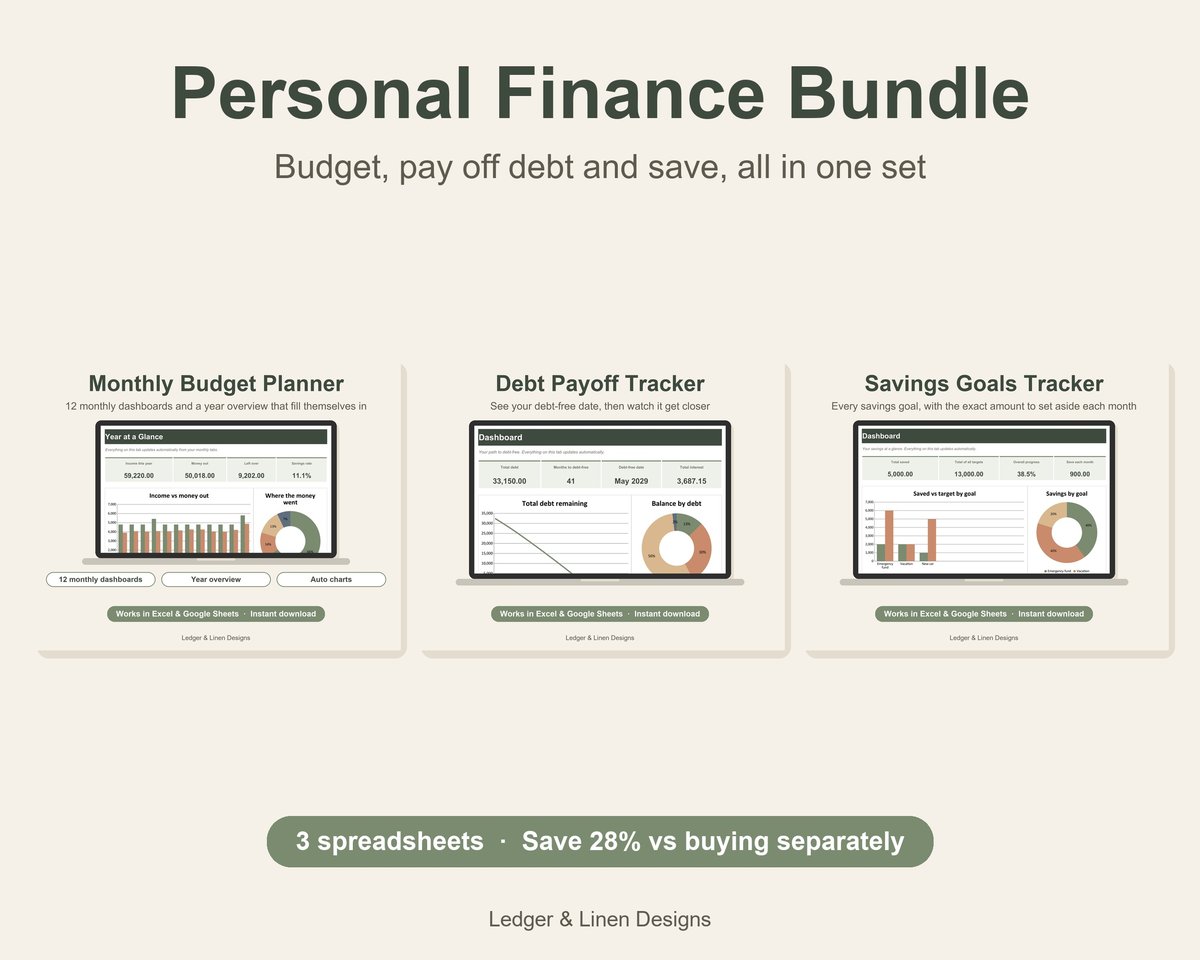
Our Monthly Budget Planner gives you 12 monthly dashboards and a year overview that fill themselves in from one purchase log, with needs, wants, savings and debt grouped for you.
This guide is general information to help you get organized. It isn't financial, tax, legal, medical or fitness advice; for decisions that matter, check with a qualified professional.