 Ledger & Linen Designs
How to Track Pitch Counts and Fielding for Youth Baseball
Keep a simple pitch count log, plan who plays where each inning, and make sure every player gets time in the field.
In youth baseball, two things are easy to lose track of during a game: how many pitches each pitcher has thrown, and who has sat on the bench the most. Writing both down helps you follow your league's rules and keeps things fair.
Know your league's pitch limits
Pitch limits and rest rules vary by league and age group. Look up your league's current rules before the season, and write the limit where you'll see it.
Log every outing, not just big games
For each pitcher, record the date and the number of pitches after every outing, including scrimmages. Pitches add up over a season, so the log matters most on the days that feel low-key.
Plan the field by inning
Before the game, sketch who plays each position in each inning. Count the innings each player spends in the field and on the bench, so nobody sits out more than their share.
Set the batting order ahead of time
Build the batting order from your roster before you get to the field. Rotating the order across games is an easy way to keep it fair.
For parents: keep your own record
Parents can keep a simple batting log too: at-bats, hits and walks. It's a nice keepsake, and a pitch count log at home helps you spot a busy week.
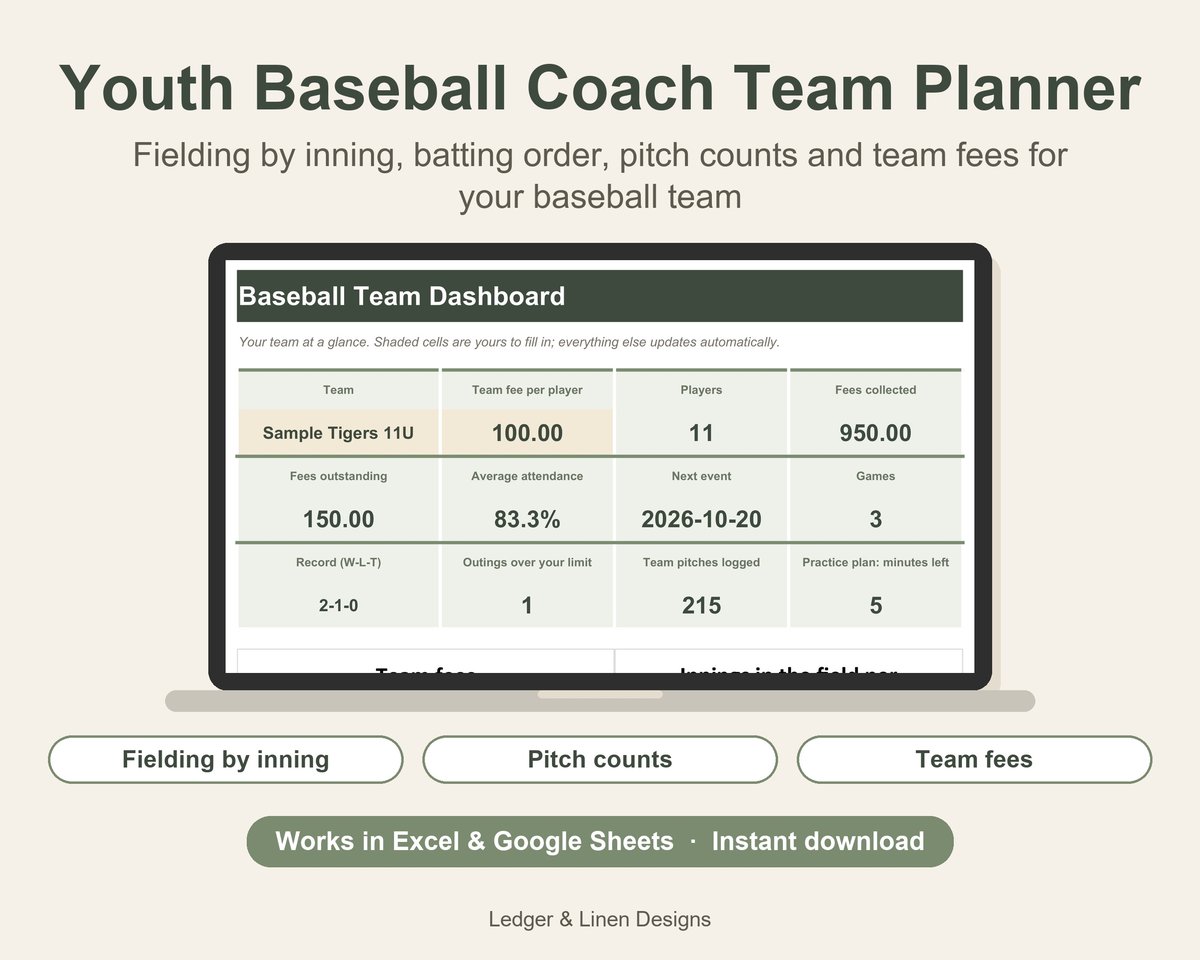
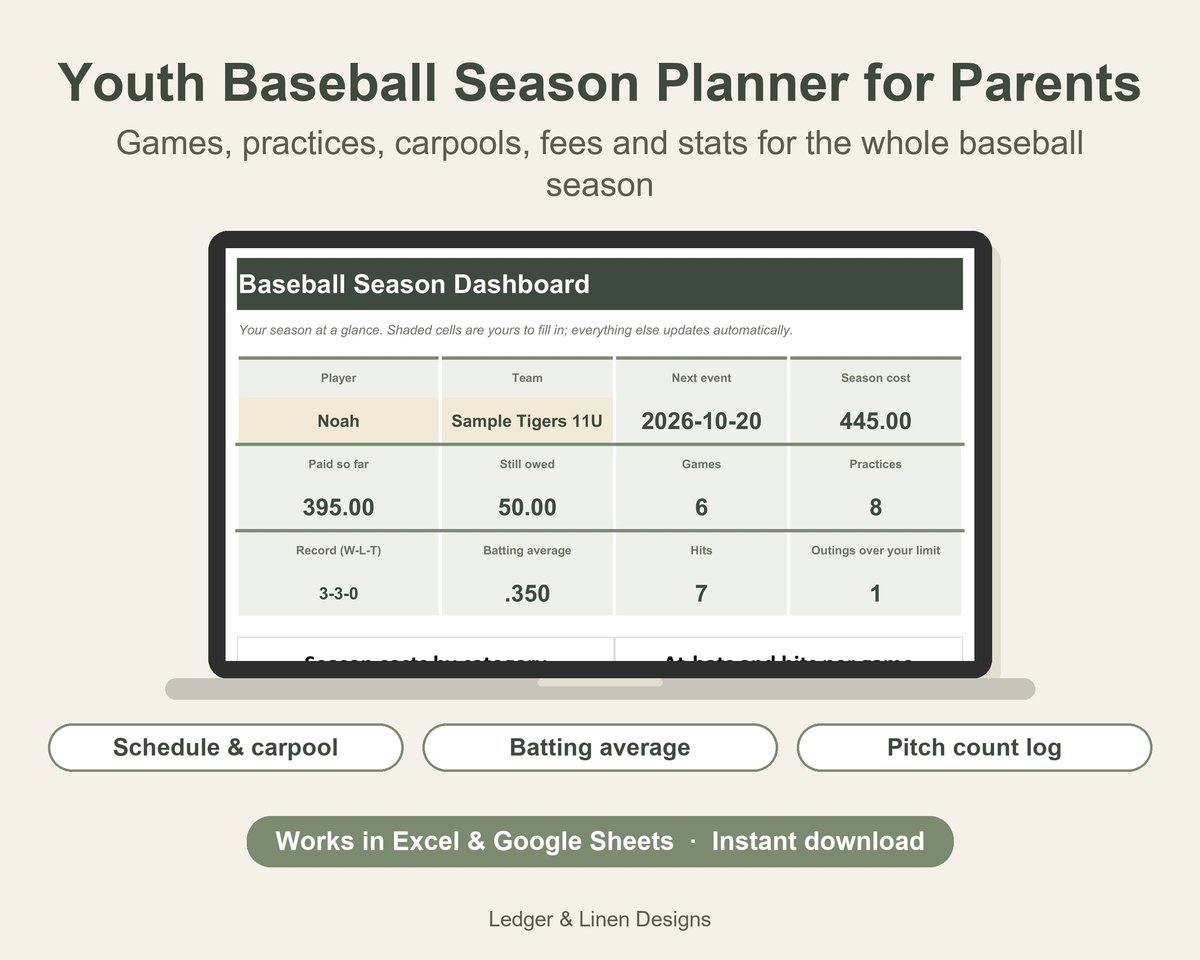
The Youth Baseball Coach Planner has a fielding plan by inning that counts field and bench innings for every player, a batting order picked from your roster, and a pitch count log checked against the limit you enter. For parents, the Youth Baseball Season Planner calculates batting average and keeps a pitch count log next to the season schedule.
This guide is general information to help you get organized. It isn't financial, tax, legal, medical or fitness advice; for decisions that matter, check with a qualified professional.